Guide
03/04/2026
The best restaurants in the Dubai Mall – a guide for 2026
Copy link

Ewelina Winiarczyk
22 February 2026
The fashion and style of Arab women's clothing is a fascinating, multifaceted topic that is often misunderstood in the West. Stereotypical views of Arab clothing do not reflect the cultural, religious, and social richness behind this phenomenon. In this article, I will present what Arab women's clothing is and what the individual items of clothing mean.
When considering traditional women's clothing in Arab countries, it is difficult to ignore the influence of Islam, climatic conditions, and local traditions. Clothing here is much more than just an everyday outfit - it is an expression of identity, social belonging, and often family tradition. When choosing clothing, women combine religious principles with practical protection from the sun and sand, as well as their own aesthetics and sense of style. Contemporary Arab fashion increasingly combines classic cuts with modern details, creating a harmonious blend of tradition and trends.
The most important elements of traditional clothing are:
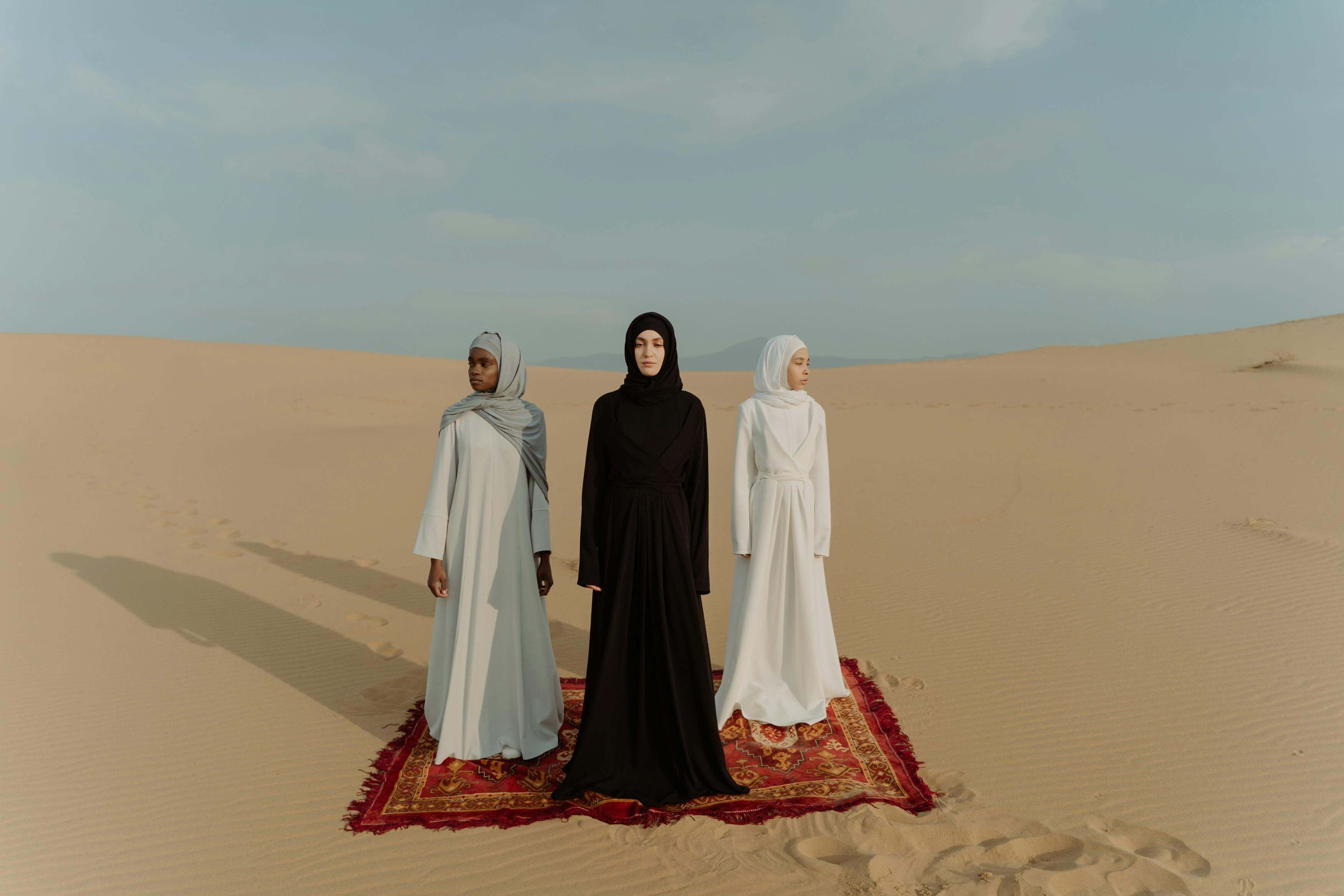
Long, loose clothing - dresses, tunics, or robes reaching to the ankles, which provide comfort in hot climates and at the same time comply with the principles of modesty. In the Persian Gulf countries, the abaya is popular - a long, usually black robe worn over everyday clothes. In some regions, richly decorated caftans or embroidered dresses are also worn on special occasions, such as weddings or religious holidays.
Colors - traditionally subdued, often black (especially in the Persian Gulf countries), although in other Arab regions, such as Morocco and Lebanon, intense colors, embroidery, and gold decorations are used. Colors and ornamentation may reflect local crafts, the history of a given region, and even social status.
Sun protection - head coverings or scarves to protect against heat and sand. Depending on religious interpretation and personal beliefs, women wear various forms of head coverings, such as the hijab, and in some countries also the niqab. Apart from their religious dimension, they also have a practical function - they protect the skin and hair from the scorching sun and desert wind.
It is worth noting that Arab women's clothing is not uniform, but varies between regions, generations, and urban and rural environments. Women in modern metropolises such as Dubai and Doha dress differently from those in smaller towns and villages. The younger generation is increasingly experimenting with fashion, combining traditional elements with European and global trends. As a result, Arab women's clothing is not just a symbol of the past, but a living, dynamic part of contemporary culture.
Two words that often appear in the context of Arab women's clothing are abaya and hijab. Although they are related, they do not mean the same thing.
Abaya
An abaya is a long, wide robe usually worn over everyday clothes. It can be described as a kind of “outer dress.” Its most common features are:
The abaya is not a religious requirement in the fundamental sense, but rather a cultural tradition reinforced by social norms. In many countries, women wear it with pride as part of their identity.
Hijab
The hijab is simply a head covering that covers the hair and neck. Women can choose from a variety of styles:
The hijab is primarily an expression of religious practice - for many women, a form of personal piety and an expression of modesty.
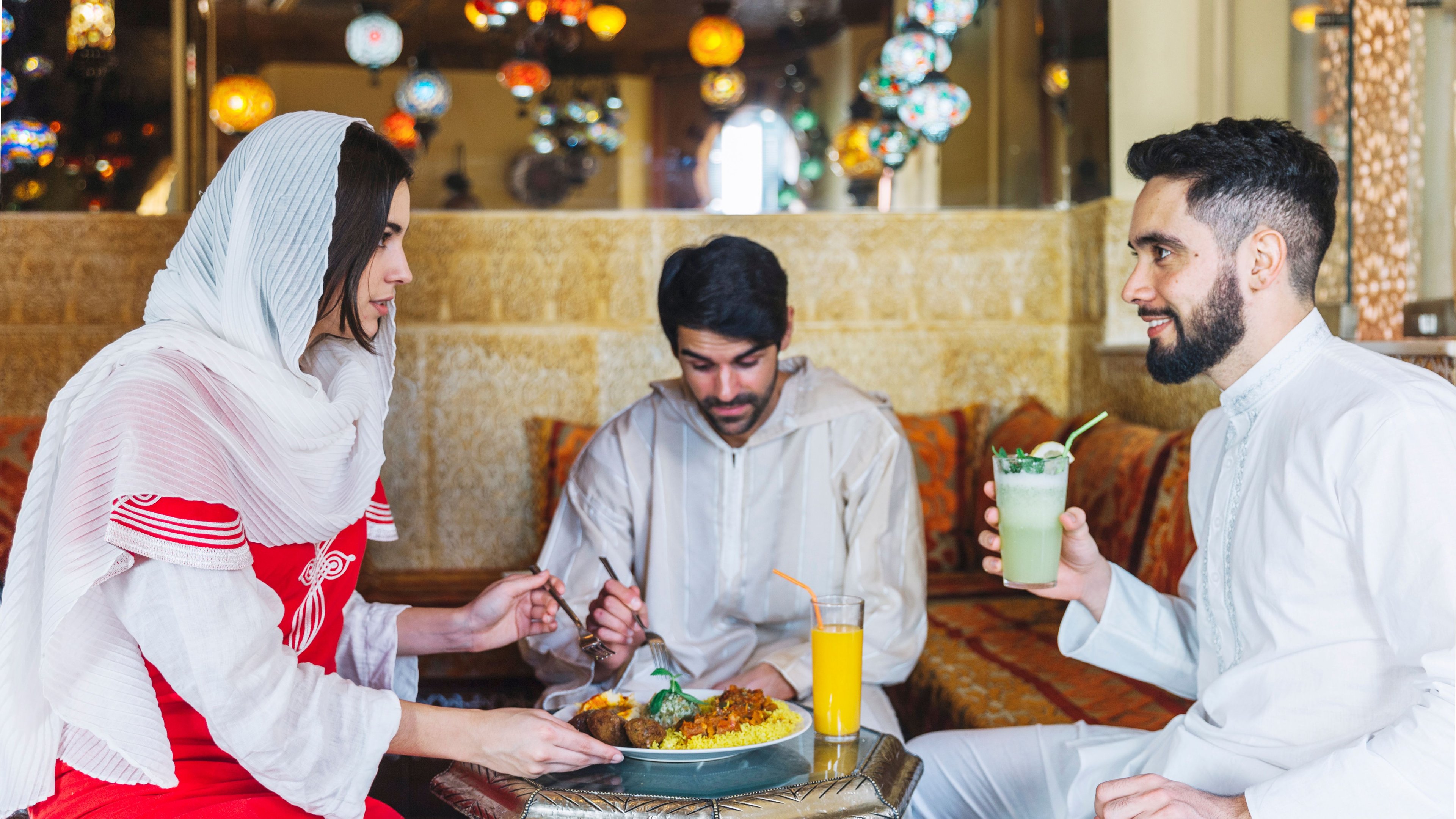
When we think of Arab women's clothing, we often imagine elegant, stylish women walking the streets of Dubai. This association is accurate, but it only shows part of the reality. In the United Arab Emirates, especially in Dubai, women's fashion is developing extremely dynamically and is a combination of tradition and modernity. In shopping malls and business districts, many women choose Western styles of dress – elegant dresses, suits, and fashionable accessories from well-known brands. At the same time, many Emirati women remain faithful to traditional items of clothing, such as the abaya and hijab, especially in public places and during family gatherings.
More and more often, we can see a skillful combination of these two worlds: classic, modest cuts are paired with luxury brands, designs, and fashionable accessories, giving traditional clothing a modern character.
How a woman dresses in the UAE depends on many factors: upbringing, family values, social status, location (whether it is a more conservative neighborhood or a bustling city center), and her individual sense of style.
Dubai is considered one of the most cosmopolitan cities in the world, which is why cafes and shopping malls are a melting pot of different aesthetics: from classic black abayas to bold, global trends. It is this harmonious blend of tradition and modernity that is the essence of the contemporary UAE fashion scene.
Arab women, despite sharing similar values, are not homogeneous in terms of clothing. Differences can be observed between:
The fashion and style of Arab women's clothing is a rich phenomenon. Clothing is not a single, closed category, but a mosaic of tradition, religion, climate, history, and contemporary influences. From the abaya and hijab, to the elegant street style of Dubai, to the traditional motifs of the Maghreb regions, each item of clothing tells its own story.
Understanding this diversity is not just about looking at fashionable fabrics or cuts, it is about understanding the culture, values, and individual identity of Arab women.
When planning a vacation in Dubai, make sure to book accommodation and attractions in advance.
1. How does an abaya differ from a burqa?
An abaya is a long, loose robe worn over clothing that covers the body but leaves the face uncovered and is often combined with a hijab. A burqa, on the other hand, covers the entire body, including the face and eyes (with a mesh at eye level), and is mainly characteristic of countries such as Afghanistan. The difference is therefore primarily in the degree of body coverage and the cultural context in which these garments are worn.
2. Do all Arab women wear the hijab?
No, not all Arab women wear the hijab. Whether or not it is worn depends on the country, the level of religiosity, family traditions, and the individual decision of the woman.
3. Do female tourists have to wear traditional clothing in the UAE?
No, female tourists in the United Arab Emirates do not have to wear traditional clothing such as an abaya or hijab. It is sufficient to dress modestly in public places, and more conservative clothing is only required when visiting mosques.
4. What are the rules for women's clothing in Arab countries?
The rules for women's clothing in Arab countries are mainly based on the principle of modesty; clothing should cover the shoulders, neckline, and knees, and should not be too tight or see-through. In more conservative countries, such as Saudi Arabia, social norms are stricter than in Dubai, for example, where there is greater freedom. Ultimately, much depends on local customs, the region, and individual religious beliefs.
See other news
03/04/2026
The best restaurants in the Dubai Mall – a guide for 2026

03/04/2026
Top 10 Free Attractions in Dubai – What is worth Seeing for free?

03/04/2026
A guide to Ramadan in Dubai – everything you need to know

02/04/2026
Uber has partnered with Wrocław Airport
02/04/2026
LOT’s route from Warsaw to Bangkok will launch earlier than planned

31/03/2026
Are you flying via or to Hong Kong? Remember the new border regulations

30/03/2026
Żabka is coming to airports

30/03/2026
New bike paths are being built in Dubai

30/03/2026
The UAE saw a steady pace of new real estate project development in March 2026

30/03/2026
Dubai Police responded to approximately 50,000 calls in less than 10 seconds during a violent storm