Guide
26/06/2026
The History of the Formation of the United Arab Emirates
Copy link

Bartosz Jaglarz
26 June 2026
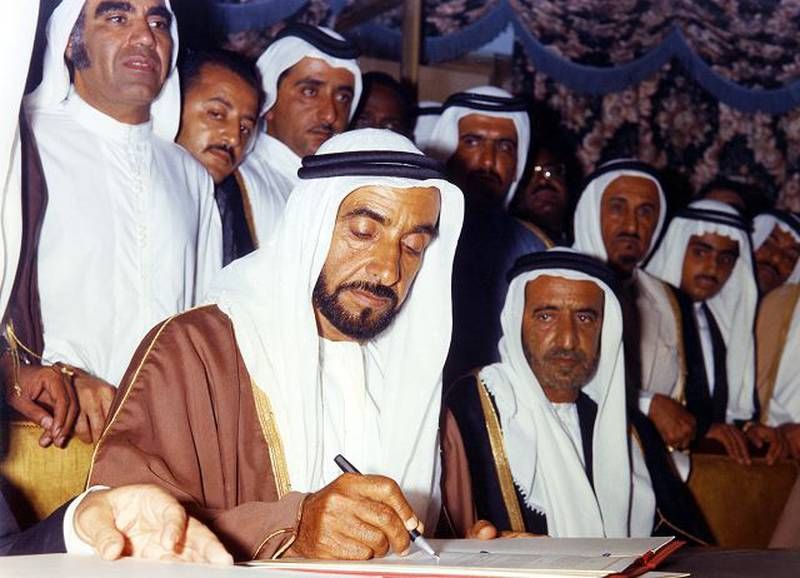
In the photo, you can see His Highness Sheikh Zayed signing the federation treaty on 2 December 1971, establishing the United Arab Emirates. This marked the beginning of the UAE’s journey towards becoming a modern nation. The history of the United Arab Emirates is full of interesting facts and fascinating stories that shape the country’s modern image. Find out how the United Arab Emirates came into being!
The history of Abu Dhabi and Dubai before 1971 is not as well known as their present day, and this is key to understanding why the United Arab Emirates looks the way it does today. How did it come about that today you can easily book a trip to Dubai and admire the view of the city from accommodation in Dubai on the 75th floor? Why does the Formula 1 season end in Abu Dhabi, and why are politicians from all over the world able to hold the most important negotiations on ending wars right here in the UAE’s capital? To better understand this process, we invite you to explore the history of the United Arab Emirates!
Although many associate this region mainly with modernity, the history of settlement in these areas dates back as far as 125,000 years. Imagine that thousands of years ago, today’s desert was a much wetter place, and in the Neolithic era, the inhabitants were already engaged in fishing and agriculture. A key moment was the Bronze Age and the flourishing of the Magan civilisation, which traded copper with distant Mesopotamia. Traces of those times can still be admired today at the Hili Archaeological Park in Al Ain, where monumental tombs are located.
Finds on the islands of Marawah and Dalma prove that the tradition of pearl diving originated here as early as 7,000 years ago. This region has always lain at the crossroads of trade routes connecting Asia, Africa and Europe. The ancient inhabitants showed remarkable ingenuity in creating irrigation systems known as falaj, which enabled the oases to survive in the harsh climate. Even before the era of skyscrapers, these lands were bustling with life and were an important point on the world map.
The 7th century marked a turning point when the region adopted Islam, which permanently integrated the local tribes into the Arab-Muslim world. During the Middle Ages, ports such as Julfar, located in what is now the emirate of Ras Al Khaimah, became major trading centres. It was from there that ceramics, spices and the finest pearls from the Gulf were shipped out into the world.
The region was then ruled by the kings of Hormuz, who controlled strategic sea routes. The famous navigator Ahmad ibn Majid, born in Julfar, became a symbol of the great seafaring traditions of that era. The coast was a key link in the Arab monopoly on trade between the East and Europe. Thanks to maritime trade, local communities were able to develop and build prosperous urban centres. The Middle Ages were a time when the region’s identity as masters of navigation and commerce was firmly established.
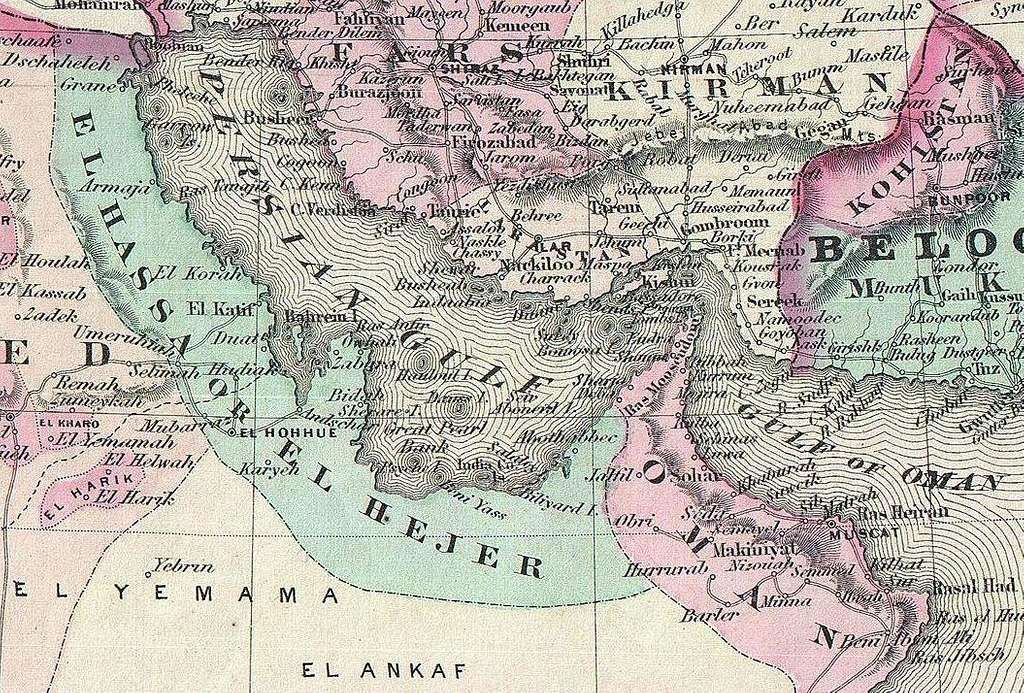
From the 16th century onwards, the region became an arena for power struggles between European powers, beginning with the arrival of the Portuguese. Later, the Dutch and British arrived, seeking control of the lucrative trade routes to India. The British fleet frequently clashed with the local Al Qasimi dynasty, which defended its independence at sea. To restore peace and safeguard trade, a series of peace treaties were signed in the 19th century. The sheikhs undertook to cease naval warfare, leading to the region being known as the Trucial States, or Treaty Oman.
The British oversaw foreign affairs and defence, but the sheikhs retained autonomy over internal matters. At that time, the inhabitants’ lives were still based on traditional occupations such as camel breeding and seasonal pearl diving. It was not until the collapse of the pearl industry in the 1930s that the region was forced to seek new sources of income.
The region’s true transformation began when vast oil reserves were discovered in Abu Dhabi in the late 1950s. The first oil exports in 1962 provided Sheikh Zayed with the funds to finance his grand vision of modernisation. Zayed understood that there is strength in unity, so he began persuading other rulers to create a joint state. This process gained momentum when the United Kingdom announced its intention to withdraw its troops from the region.
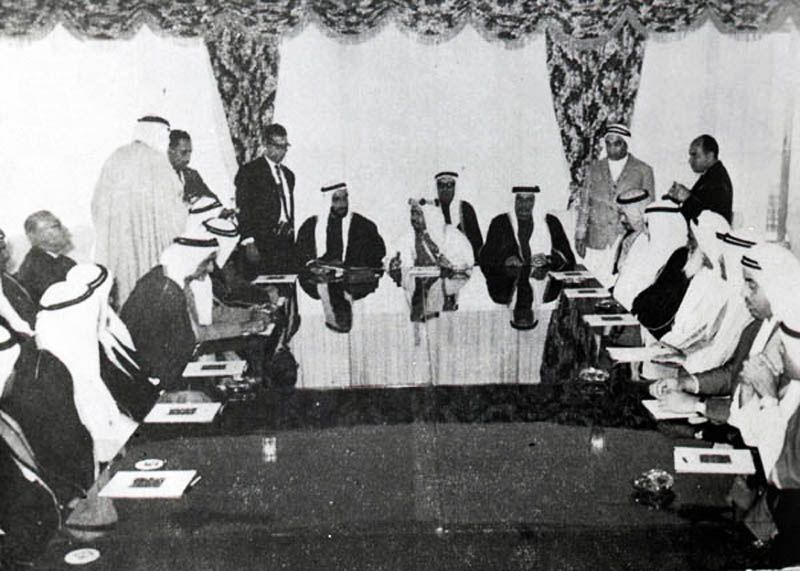
The sheikhs of Abu Dhabi and Dubai played a decisive role in easing long-standing tribal rivalries. Their historic meeting in February 1968 laid the foundation stone for the future union. Zayed was able to use oil wealth not for domination, but as the foundation of federal solidarity. Thanks to his diplomacy, a framework for a modern state was successfully established.
For over a century, the United Kingdom maintained its British protectorate in the Persian Gulf, ensuring the security of sea routes. However, after the Second World War, the empire faced enormous financial difficulties and an economic crisis. In January 1968, the British government unexpectedly announced that it would withdraw all its forces from the territories east of the Suez by the end of 1971.
This decision was dictated by the fact that London could no longer afford to maintain costly defence commitments in the region. British forces were overstretched, and the government’s priorities had shifted towards domestic social spending. This sudden announcement forced the sheikhs of the Trucial States to accelerate talks on a shared future. The British withdrawal created a political vacuum that local leaders had to fill quickly.
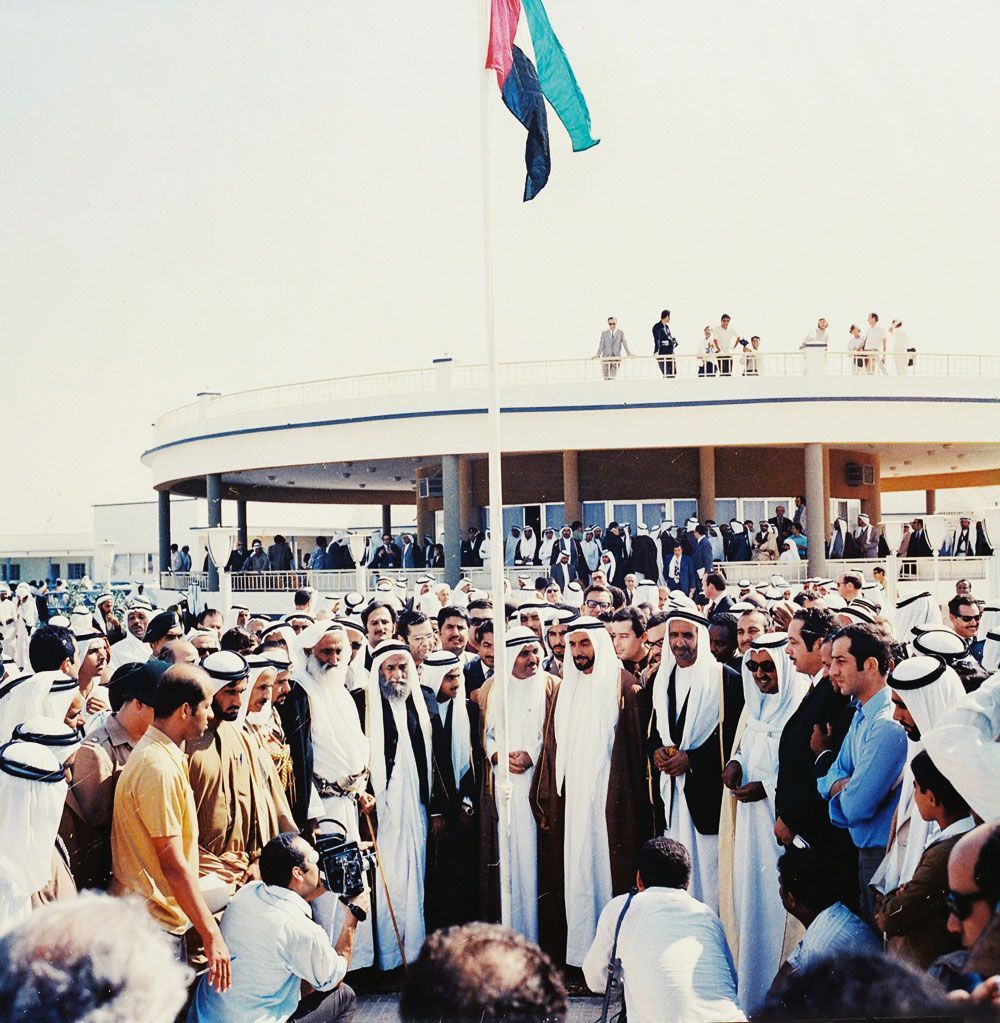
The UAE was officially established on 2 December 1971, marking the Emirates’ full independence from British control. On that day in Dubai, six rulers signed the union documents, and the world welcomed the new nation. Who founded the United Arab Emirates? The main architects of this union were Sheikh Zayed bin Sultan Al Nahyan and Sheikh Rashid bin Saeed Al Maktoum. It was their vision and determination that made it possible to overcome centuries-old divisions between the sheikhdoms.
Who was the founder of the United Arab Emirates? Sheikh Zayed, who became the first president of the federation, is regarded as the father of the nation. What role did Sheikh Zayed play in the creation of the UAE? He used his negotiating skills and wisdom to persuade the other sheikhs to work for the common good. On the day of unification, the UAE’s interim constitution was adopted, setting out the framework for the functioning of the state. The formation of the UAE in 1971 marked the moment when a global power began to emerge from small fishing villages.
Initially, the plans were more ambitious, and it was envisaged that the union would comprise as many as nine territories, including Qatar and Bahrain. Ultimately, however, these two countries opted for full independence as separate states. Therefore, on 2 December 1971, the federation of seven emirates began as a union of only six of them: Abu Dhabi, Dubai, Sharjah, Ajman, Umm Al Quwain and Fujairah.
The seventh emirate, Ras Al Khaimah, initially hesitated due to territorial disputes with Iran. However, after receiving appropriate federal guarantees, Sheikh Saqr decided to join the union. This took place on 10 February 1972, which finally completed the shape of today’s Emirates. Thanks to this unification, the Gulf states gained a much stronger position on the international stage.
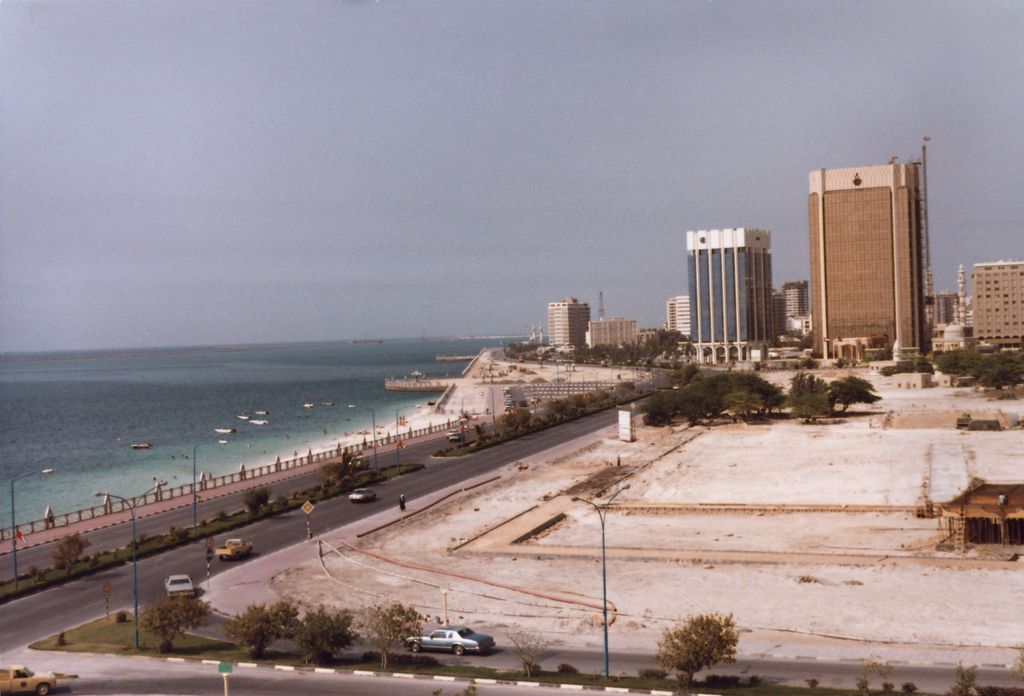
Following unification, the country experienced an unprecedented surge in development, transforming from a poor region into a global business hub. Thanks to Sheikh Zayed’s wise policies, oil revenues were invested in modern hospitals, schools and motorways. Dubai became a global leader in tourism, focusing on iconic structures such as the Burj Khalifa and artificial islands, which can now be admired as attractions in Dubai.
Today’s UAE is not just about luxury, but also innovation – from zero-emission city projects to space missions to Mars and the Moon. The Emirates place great emphasis on education and women’s rights, with women now playing many key roles in the country. The nation is successfully diversifying its economy so as not to rely solely on black gold in the future. This young nation, just over 50 years old, has become an inspiration to the whole world, combining respect for tradition with a vision of the future. Equally interesting is the history of Dubai, which we have also covered on our website
UAE National Day, or National Day, falls every year on 2 December, commemorating the date of unification in 1971. It is a time when the entire group of seven emirates and their history of formation is celebrated with great pomp and pride. The streets of the cities are decorated with thousands of flags, and residents take part in numerous parades and festivals. In the evenings, spectacular fireworks displays light up the sky over Dubai and Abu Dhabi.
It is not only a time for fun, but also a moment to reflect on the extraordinary progress this country has made over the past few decades. For every Emirati and tourist, it is a perfect opportunity to experience the spirit of unity and hospitality that lies at the heart of the local culture. The celebrations usually last two days, blending the past of Bedouin traditions with the modern face of the country.
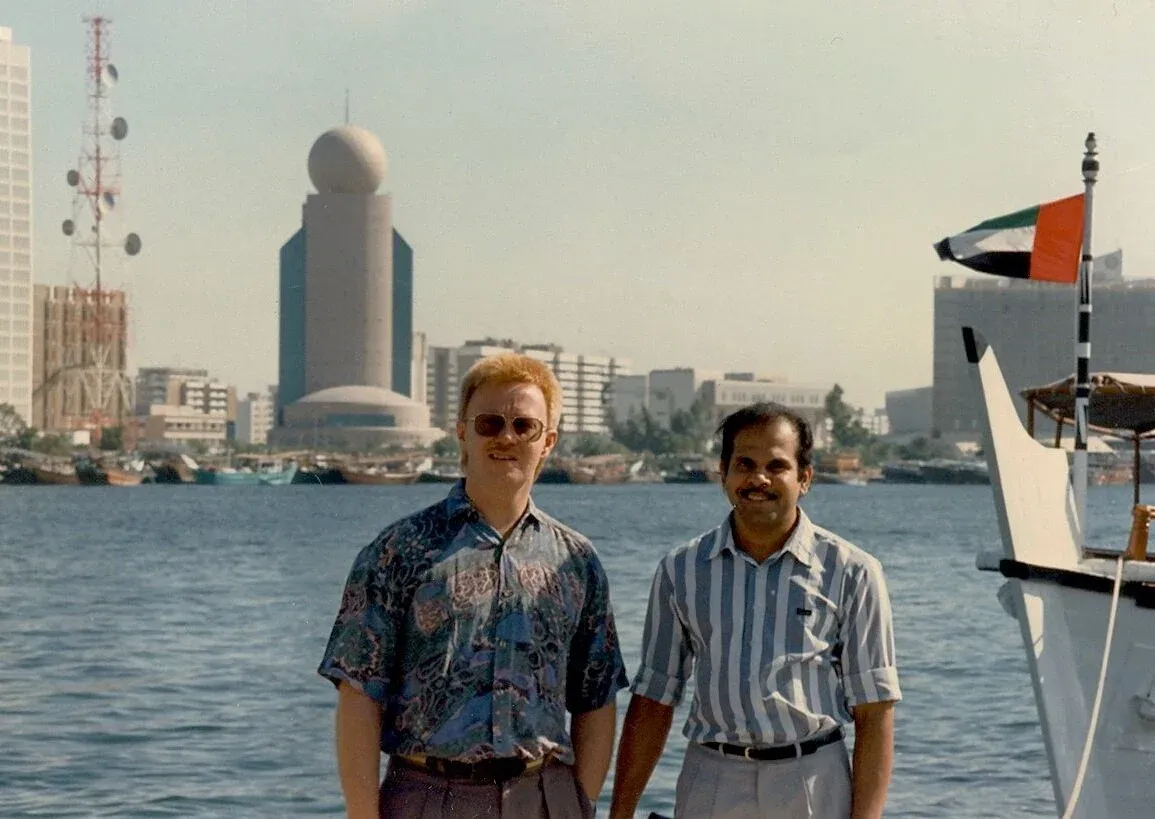
That’s the whole story of the unification of the Emirati principalities. You now know when the United Arab Emirates was founded and what its history is. To better understand the modern UAE, you need to know its history, and to this end, the role of Sheikh Zayed in the formation of the UAE, which we described in the article: Who is Sheikh Zayed?, as well as other articles published regularly on our blog, may be useful. Do have a look!
The UAE was formed as a result of the unification of seven independent sheikhdoms following the UK’s announcement in 1968 that it would withdraw its military protection from the region. Sheikhs Zayed and Rashid played a key role, officially proclaiming a federation based on a common constitution on 2 December 1971.
The federation currently comprises seven emirates: Abu Dhabi, Dubai, Sharjah, Ajman, Umm Al Quwain, Fujairah and Ras Al Khaimah.
Before the oil era, the region was a sparsely populated desert where nomadic Bedouin tribes engaged in animal husbandry, agriculture in oases and fishing. The coastal economy was based mainly on the extremely difficult and dangerous industry of natural pearl diving.
See other news
26/06/2026
The History of the Formation of the United Arab Emirates
25/06/2026
Turkish Airlines reintroduces premium economy class
25/06/2026
Syrian Air resumes flights to the European Union

24/06/2026
Meet Ski Dubai, or the ski slope in Dubai

24/06/2026
Deira Perfume Souk guide: where to find the best fragrances?

24/06/2026
Visiting Dubai with a child – what are the best attractions to choose?
24/06/2026
Abu Dhabi – the best attractions. TOP 30 places worth seeing in the UAE capital

24/06/2026
Mezze – what it is and how to order Arabic starters
24/06/2026
Hatta – a mountain retreat from the heat in the Emirate of Dubai

23/06/2026
KidZania Dubai – a career-themed town for children