Traveling to the UAE (United Arab Emirates) is usually a mix of awe and… questions like: what is forbidden in the UAE, what Dubai’s laws look like for tourists, whether Abu Dhabi follows the same rules, and how to avoid getting into trouble over things that are “normal” in Europe. This guide organizes the key legal rules in the UAE, as well as customs and prohibitions that can realistically affect tourists.
Note: The information below is general and educational. It is not legal advice or an individual consultation. Failing to follow local laws and customs can lead to legal problems, including serious consequences such as arrest or deportation.
Overview of the legal system in the United Arab Emirates
A mix of civil and religious law
The UAE legal system combines:
statutory (secular) law — including federal codes and acts,
elements of Islamic law — commonly referred to as Islamic law in the UAE / Sharia (more below),
local regulations — because each emirate may have its own more detailed rules.
It’s worth emphasizing that Sharia is considered a principal source of legislation in the UAE, and it influences many regulations in force.
Main sources of law
In practice, tourists most often encounter:
federal law (applicable across the whole country),
emirate-level rules and regulations, i.e., local rules — knowing and following local rules is key to safety and comfort,
implementing regulations and enforcement practice (important — what the law says “on paper” and how it is applied “in practice” can differ).
The role of federal and emirate authorities
The UAE is a federation. Many matters (e.g., borders, entry rules, parts of criminal law) are regulated federally, but laws, customs, and prohibitions can vary between emirates — especially on social/moral issues (e.g., alcohol).
See also: Attractions in Dubai
Sharia law and its significance in the United Arab Emirates
Core principles
Sharia in the UAE refers to a system of norms derived from Islamic tradition. For tourists, in everyday life it mainly means an emphasis on:
maintaining public order and safety,
public morality (decency in public spaces),
particular sensitivity to religion and offending religious sentiments.
Sharia-based norms are strictly regulated and enforced, and UAE laws are known for being strict.
Which areas does Sharia regulate?
It is most commonly highlighted in areas such as:
family matters and personal status (marriage, divorce, custody),
parts of morality/public-decency rules,
in the background — values that influence how laws are interpreted and enforced.
When can Sharia affect foreigners?
The key rule for tourists is simple: tourists are subject to local law. Even if certain things are not part of “your culture,” local norms apply in public spaces. The biggest risks arise around breaches of public order, decency, intoxicants, and “public conflicts.” Violations can lead to legal consequences including fines, arrest, or deportation.
How Sharia-influenced rules affect tourists: examples of risky behavior
If you’re asking: What are the most important prohibitions in the UAE for tourists? — problems most often start with:
aggressive behavior and fights (including “in a hotel after drinking”),
obscene gestures, insults, harassment,
public displays of affection — in Dubai small gestures (e.g., holding hands) are usually tolerated, but kissing and more intimate displays in public can be treated as a breach of decency rules and may have consequences (warning, fine, intervention),
using offensive gestures, which are punished harshly and can lead to serious consequences, including multi-year prison sentences,
“sensitive” topics in public places (insulting religion, state symbols, authorities).
In the Emirates, violations can lead to serious consequences, including harsh penalties, and in extreme cases even multi-year imprisonment. Outcomes can be more serious than “a fine and you’re done” — criminal proceedings, fines, and in extreme situations deportation are possible. That is the practical meaning behind “fines and penalties in the UAE.”
Behavior in public places in the Emirates
Dress code
It’s worth noting that over the years dress rules in the UAE (especially Dubai) have clearly become more liberal — particularly in tourist districts and places geared toward international visitors. That doesn’t mean “anything goes” or that local norms no longer apply.
It’s not about dressing like you’re “in a museum” 24/7, but in many public places (malls, government offices, public transport, streets in more local neighborhoods) it’s better to stick to a modest, toned-down standard: shoulders and knees generally covered, and beachwear kept for the beach or pool. Instead of rigid “allowed/forbidden” rules, the safest approach is: the more official or more “local” the place, the more conservative your outfit should be.
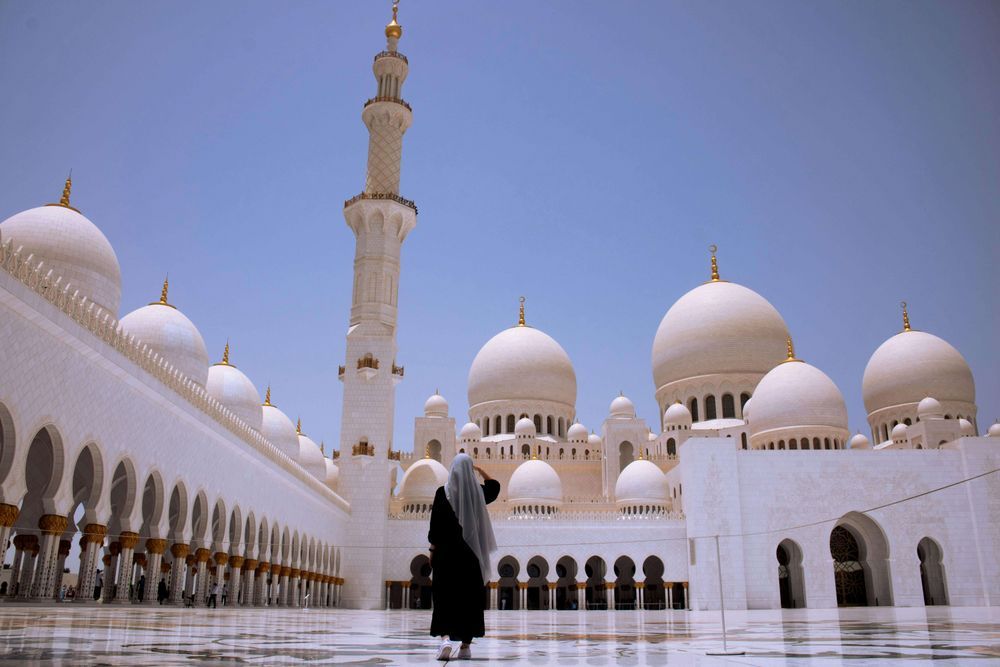
Women’s attire in a mosque
Prohibited behavior — practical examples
Under “what you must not do in the UAE,” you’ll often see:
public arguments, shouting, pushing,
filming/taking close-up photos of someone “in their face” without consent in private situations,
obscene gestures, offensive language (including in messages and online),
indecent behavior in public spaces,
public displays of affection and offensive gestures are strictly prohibited.
How to behave during police/security checks
Remember to stay calm and show respect toward officers during any checks. In the UAE, extra caution is recommended in dealings with the police and officials.
Calm, polite, no emotional arguments.
Keep an ID document with you (passport / copy of passport — depending on the situation).
Don’t record officers.
If it becomes serious: ask to contact your consulate.
Alcohol rules in public places
Alcohol in the UAE may be consumed only in licensed venues or hotels.
If you’re asking: Can you drink alcohol in the UAE? — generally yes, but under conditions.
Where is alcohol allowed?
The safest tourist rule: alcohol is permitted only in licensed bars, hotels, and licensed restaurants. You must not drink alcohol outside these places, including in public spaces or on beaches. In private spaces, alcohol is legal only if it is legal in the particular emirate.
Ban on drinking in public
In many situations, “public drinking” and “public intoxication” are a fast track to trouble. Drinking alcohol in public is strictly prohibited and can lead to serious legal consequences. Stick to the rule: street, public beach, park, public transport — no. (This is the practical side of “alcohol law UAE.”)
Minimum age
In Dubai and Abu Dhabi, 21+ is commonly cited as the minimum age to buy and drink alcohol. Note: some emirates can be stricter — a classic example is Sharjah, known for a more conservative approach. In Sharjah, there is a total ban on possessing alcohol.
Read also: What are the prohibitions in Dubai?
Customs rules and transport restrictions
Key customs principles
When entering the UAE, assume customs takes seriously: medicines, controlled substances, “equipment” of questionable purpose, and also content on devices. Travelers may bring medicines into the UAE only for personal use, in reasonable quantities, and the quantity must not exceed a three-month supply. All medicines must be in original packaging.
Cash declaration limits
Official government information indicates that when entering/leaving, you must declare monetary funds above AED 60,000 (or equivalent). Persons under 18 cannot bring amounts greater than AED 40,000 (or equivalent in foreign currencies or traveler’s checks).
“Check before you fly” rule
If you carry anything non-standard (prescription meds, larger amounts of cash, photo/drone gear, “strong” painkillers) — check the current rules on official sites before traveling.
Prohibited goods and obscene content
Risk categories (examples)
drugs and controlled substances (possession and use are punished harshly — even a minimal amount can lead to multi-year prison or the death penalty),
some medicines (more below),
items considered religiously offensive,
pornographic/obscene materials.
Content on devices
Practical tip: if your phone/laptop contains content that could be considered obscene, delete it before traveling. Possessing or sharing such material may be treated as a violation under local law and can lead to serious legal consequences. It’s a simple step that can save stress.
Bringing medicines into the UAE
This is a topic that affects many people. The UAE’s official government platform emphasizes that there are controlled medicines and import rules. In Arab countries such as the UAE, some medicines that are available over the counter in Poland may require a doctor’s approval or may be completely prohibited. Medicines must be in original packaging and the amount must not exceed a three-month personal supply.
Keep medicines in original packaging.
Carry the original prescription or a doctor’s letter (preferably in English; sometimes Arabic is also suggested). For some medicines, a translated medical certificate may be required.
For some controlled medicines, especially narcotic or psychotropic substances, prior approval/online procedure may be required and issued electronically (depending on the substance).
Read also: List of prohibited medicines
Entry and stay in the UAE
Passport validity requirements
You will most often encounter a requirement that your passport be valid for at least 6 months from the date of entry into the UAE. This means entry dates matter when determining the minimum validity — the document must remain valid for the required period from the moment you cross the border. Always verify this before departure with your carrier and official sources.
Tourist visa for Polish citizens
For Polish citizens, a stay of up to 90 days within a 180-day period is commonly described under visa-free entry/“visa on arrival.”
Extending your stay
If you want to stay longer: rules depend on entry type and status — rely on official channels (airlines, ICP/GDRFA, embassy/consulate). For longer stays, contact the local immigration authority to learn which documents are required for registration or extension.
Criminal law, drugs, and penalties in the UAE
If you’re interested in UAE criminal law and the question “What penalties apply for breaking the law in the UAE?” — the shortest key answer is: the UAE has very strict laws, and financial crimes (e.g., embezzlement, fraud) are punished particularly severely. Penalties can include detention, freezing/confiscation of bank accounts, and the obligation to settle debts before release from custody.
Zero tolerance for drugs
Recreational drugs are prohibited and the risk is enormous (from arrest to lengthy proceedings). Official government sources clearly indicate a ban and a restrictive approach.
“Public” offenses
Categories that can quickly escalate include: aggression, threats, harassment, indecent behavior, public disturbance.
What to do if detained
Remember not to sign documents you do not understand.
Stay calm.
Don’t sign documents you don’t understand.
Ask to contact your consulate.
If needed, ask for a lawyer.
UAE — differences between emirates
This matters because laws for foreigners in Abu Dhabi may be enforced somewhat differently than in Dubai, and Sharjah is known for a more conservative approach.
Dubai: more “tourist-friendly” and pragmatic, but that doesn’t mean “no rules.”
Abu Dhabi: similar standards in many areas, also strong emphasis on public order.
Sharjah: often described as more conservative (including on alcohol).
Rule of thumb for peace of mind: before visiting another emirate, check the local rules.
Practical tips for travelers to the UAE
Document checklist
passport,
medical insurance policy,
booking confirmations (hotel/flight),
prescriptions/medical letters for medicines,
a copy of your passport (offline) + consulate contact details.
Caution in public places
Remember to remain calm and respect local rules in public.
less “loud emotion,” more calm,
zero fights (even if someone “provoked” you),
be careful with jokes/gestures that are “harmless” in Poland.
Insurance and contacting the consulate
Medical insurance is a must. Make sure it also covers medical transport in emergencies, as this is an important safety factor during a stay in the UAE. If you like having a “plan B,” consider registering your trip in a consular system (for faster support in crisis situations).
Frequently Asked Questions (FAQ)
Can tourists drink alcohol in the UAE?
Usually yes — but stick to licensed venues and avoid public spaces. Alcohol consumption is strictly regulated by UAE law. In Dubai and Abu Dhabi, 21+ is standard, while in some emirates (e.g., Sharjah) the approach can be much stricter.
Can you take photos in public places in the UAE?
Generally you can photograph places, but be careful with people and private situations. A safe rule: don’t take close-ups of strangers without consent, don’t film conflicts or interventions by authorities. Photographing government buildings and military facilities is strictly prohibited and can lead to serious legal consequences. (This is one of the common “mines” under “photography UAE law.”)
How do medicines and customs rules work in practice?
Keep medicines in original packaging, carry a prescription/doctor’s letter, and if they’re controlled medications, check procedures and any required online approval before flying.
Additionally: cash above AED 60,000 must be declared.Is there freedom of speech in the UAE?
In practice, it’s a sensitive topic. In everyday tourist life, it’s best to avoid public statements, gestures, and online content that could be considered offensive toward religion, the state, symbols, or other people. Social media activity is regulated by local law — violations can result in criminal sanctions such as high fines or even prison. If your priority is legal safety, the rule “less public, more private” is usually the safest approach.